In the long June evenings, when the day slowly recedes, and the conversations become deeper than usual, CRIC – Festival for Critical Culture invites you to a series of meetings with some of the most significant contemporary thinkers, dedicated to one simple but essential question: what does it mean to live this life – together with others? As part of the thematic framework “Caring – Modes of Being Together”, we are honored, but also challenged, to have a discussion with the most relevant names on the contemporary scene of critical theory, philosophy and art, Martin Hägglund, Tomislav Medak, Valeria Graziano, Alisa Zhulina and Marcel Mars.
This is a time of isolation, of a state of shock and sadness, which leads to paralysis of the sensible, the political and the common. Therefore, we must necessarily return to the concepts and forms that make it a clear determinant in life, which can become meaningless if its architectural structure does not rest on love, care, freedom, solidarity, responsibility and joint action. Not as abstract, already almost devalued concepts inherent in empty academic and political platitudes and podiums, but as everyday practices through which we oppose violence, fear, political, social, intellectual fragmentation and isolation.
We will focus on three main, rather delicate areas of our contemporary political and ideological environment. These are areas that are key determinants for the history of philosophical and political thought: freedom, secularism and socialism. This year, CRIC will attempt to open and confront different epistemological perspectives, questions and polemics related to the establishment of this (bare) life that exists within the framework of endangered, perverted, unjust, and oppressive societies, which rest on new techno-feudal narratives that swallow and destroy the idea of empathetic, caring and solidary communities. What kind of political, socio-cultural and economic order would be ideal/justifying for us as beings who face and cannot accept our own mortality? What kind of lifestyle should we live and what should we do collectively/jointly, to enable a radical change in the idea of communities? How can we re-examine and reconsider the concepts of freedom and equality? What movements can we encourage that will confront the current concept of communities and offer just social concepts and practices?
Inspired by the three brilliant philosophical works “This Life – Secular Faith and Spiritual Freedom” by Martin Hägglund, “Pirate Care: Acts Against the Criminalization of Solidarity” by Valeria Graziano, Marcel Mars and Tomislav Medak and “Theatre of Capital” by Alisa Zhulina, we will discuss our mutuality as a condition for freedom, care as a form of resistance and the possibility of imagining different ways of living beyond the logic of profit and alienation, our finitude and our treatment of time, democratic socialism, spiritual freedom as a secular responsibility, and the economic and political emancipation of theater. If, as Martin Hägglund writes, our finitude is a condition for our care, then the question posed by the festival is: what do we do with the time given to us? To whom and to what do we dedicate ourselves? And what worlds do we create through those commitments?
Therefore, we invite you to a joint reflection on the possibilities for a different life. A life in which caring is not a private burden, but a shared strength; in which love is not an escape from the world, but a way to remain in it; in which freedom does not mean independence from others, but the ability to take responsibility together for the world we share. Come and round off the warm June nights in conversation, attention and togetherness, as the authors say, everything depends on what we do with our time together.
Program
June 26, 2026|8:00 PM
Valeria Graziano, Marcel Mars and Tomislav Medak
“Pirate Care: Acts Against the Criminalization of Solidarity”
book promotion, talk with the authors and discussion, led by Artan Sadiku and Jovana Gjerasimovska
KSP Centar Jadro
June 29, 2026|8:00 PM
Martin Hägglund
“This Life – Critique and Emancipation“
lecture, talk and discussion with the author led by Jasmina Popovska, Anastas Vangeli and Slavcho Dimitrov
Museum of Contemporary Art, Skopje
June 30, 2026|8:00 PM
Alisa Zhulina
“Theatre of Capital – Modern Drama and Economic Life”
lecture and discussion led by Petar Milat
Museum of Contemporary Art
About the events:
“Pirate Care: Acts Against the Criminalization of Solidarity”, Valeria Graziano, Marcel Mars and Tomislav Medak
In a world where care is increasingly turning into an administrative procedure or a private burden that everyone must bear alone, the question of how we care for each other is becoming one of the most important political questions of our time. What happens when institutions fail, when the market profits from our vulnerability, and communities face growing insecurity? And what forms of solidarity emerge precisely where official systems of care cease to function?
At the book launch of “Pirate Care”, Tomislav Medak, Valeria Graziano and Marcel Mars will introduce us to a radical political and ethical vision that emerges from concrete practices of mutual aid, collective organization and rebellious care. Contrary to the dominant notions that care is a limited resource managed by the state, the market, or the family, the authors show that care is a social force that multiplies precisely through sharing, cooperation, and joint action.
Drawing on experiences from feminist, labor, digital, environmental, and migrant movements, “Pirate Care” explores the possibility of creating autonomous infrastructures of support that are simultaneously a form of survival and a form of resistance. Care here does not appear as a moral duty or private virtue, but as a political practice capable of creating new social relations and new forms of togetherness.
In times of deepening economic, ecological, and democratic crises, the book calls on us to think about how to build a world in which interdependence will not be a cause for domination, but a basis for solidarity. Instead of accepting the imposed logic of scarcity, “Pirate Care” opens up space for imagining different societies in which wealth is measured through the capacity for mutual support, collective reproduction of life and joint creation of conditions for dignified living.
The promotion will be followed by a conversation with the authors and an open discussion with the audience.
The conversation will be led by Artan Sadiku and Jovana Gjerasimovska.
“This Life: Critique and Emancipation”, Martin Hägglund
In his lecture, Martin Hägglund will present his book “This Life – Secular Faith and Spiritual Freedom” (Kontrapunkt, 2020, translation: Žarko Trajanoski), a work that in recent years has emerged as one of the most significant interventions in contemporary political philosophy and critical theory. Starting from a seemingly simple but radical realization – that we have only this life – Hägglund develops a powerful defense of human finitude as the foundation of love, commitment, ethics, and political freedom.
This lecture develops the relation between critique and emancipation in his book This Life. Following Marx, he argues that social freedom is our highest good and that religious projections of a being beyond our mortal existence would wither away under emancipated conditions. Demonstrating why Marx is right, however, requires an argument that Marx himself does not provide. Drawing together the immanent critique of religion and the immanent critique of capitalism, Marin shows how This Life provides a new vision of freedom, which recognizes our mutual dependence on one another.
The lecture will offer an opportunity for in-depth reflection on the relationship between love and politics, between personal commitment and collective responsibility, as well as on the potential of democratic socialism to create conditions in which each person can truly dispose of their unique and irreplaceable life. The lecture will be followed by a conversation and critical discussion with the author.
After the lecture, a conversation with the author will follow, led by: Jasmina Popovska, Anastas Vangeli and Slavcho Dimitrov
“Theatre of Capital – Modern Drama and Economic Life”, Alisa Zhulina
Modern society is often presented as a world governed by numbers, markets and economic laws. But behind the abstract language of capital, stories, conflicts, desires, fears and human destinies have always been hidden. That is why theatre and literature are not only a mirror of economic life, but also a place where its contradictions, its promises and its violence become visible.
In her lecture, Alisa Zhulina will present the research developed in the book “Theatre of Capital: Modern Drama and Economic Life”, opening up space for reflection on the relationship between aesthetics and political economy, between dramatic form and the historical transformations of capitalist society. Starting from key works of modern and contemporary drama, Zhulina shows that the theatre stage is a privileged place from which to perceive the mechanisms of power, value, labour and social reproduction.
The lecture will offer an opportunity for a broader discussion about the role of art in understanding the contemporary world, about the capacity of drama to articulate social contradictions, and about the potential of critical culture to open new horizons of political imagination. At a time when the capital is presented as an inevitable fate, rather than a historically created system, “Theatre of Capital” reminds us that every social order is simultaneously a narrative — and every narrative can be reexamined, reshaped, and imagined differently.
The lecture will be followed by a conversation and discussion with the author, led by Petar Milat.
About the authors:
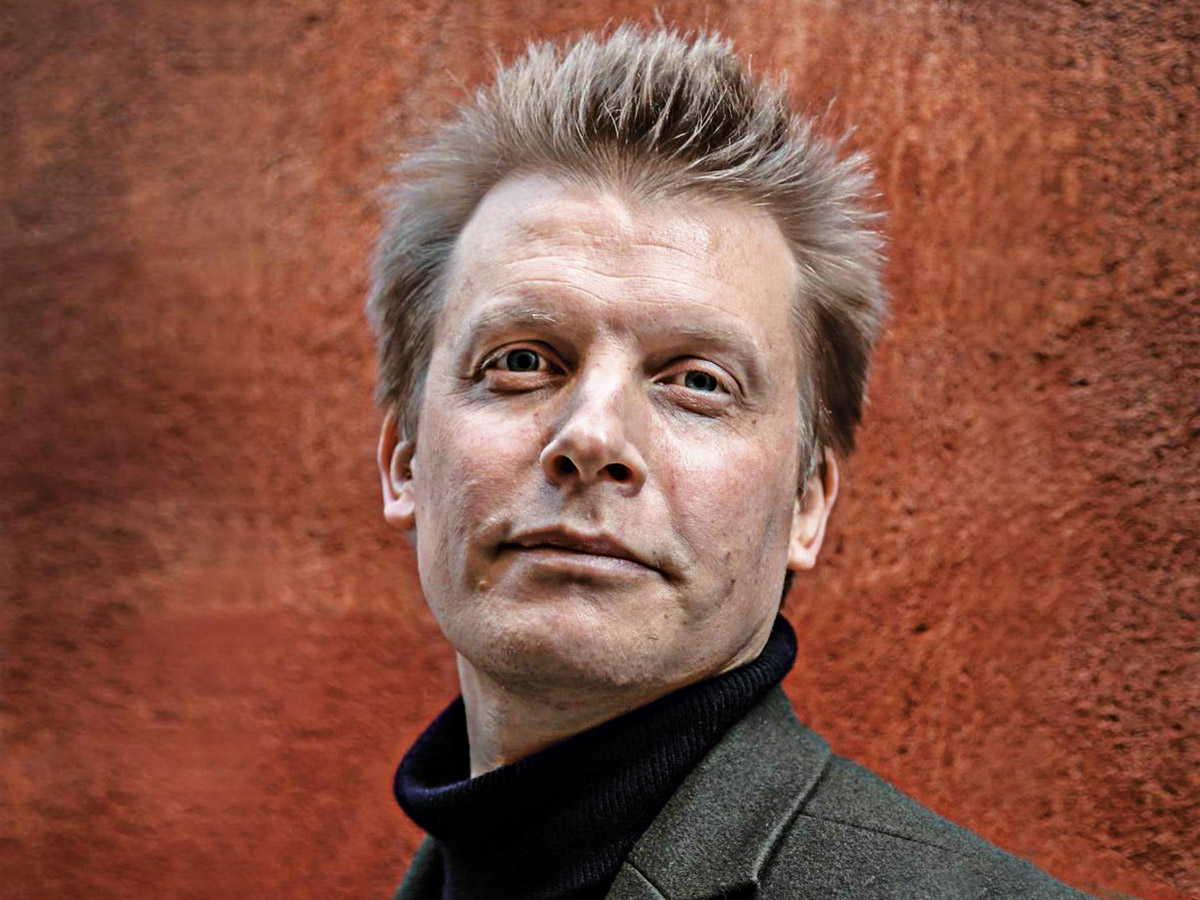
Martin Hägglund is a Swedish philosopher and Professor of Comparative Literature and Humanities at Yale University, United States. He is the author of four highly regarded books translated into fifteen languages. His work focuses on questions of freedom, time, responsibility, and secular faith, as well as the ways in which political, economic, and cultural systems shape human dependence and care for others. He has received numerous prestigious awards, including the Guggenheim Fellowship and the René Wellek Prize, and his works and ideas have had a significant impact on contemporary debates about democracy, social justice, and collective responsibility.

Tomislav Medak studied philosophy, German language and literature at the Faculty of Philosophy in Zagreb. His theoretical interests focus on the constellations of contemporary political philosophy, media theory and aesthetics. He is an advocate of free software and a member of the Board of the Croatian Creative Commons team. Tomislav Medak is a researcher with a PhD in technopolitics and planetary ecological crisis, obtained at the Centre for Postdigital Cultures at Coventry University. Together with Valerio Graziano and Marcello Mars, he is a co-founder of the project Pirate Care. For twenty years, he has been a member of the theoretical and publishing team of the Multimedia Institute and an artist in the performance collective BADco. He also occasionally writes about theatre, dance and politics.
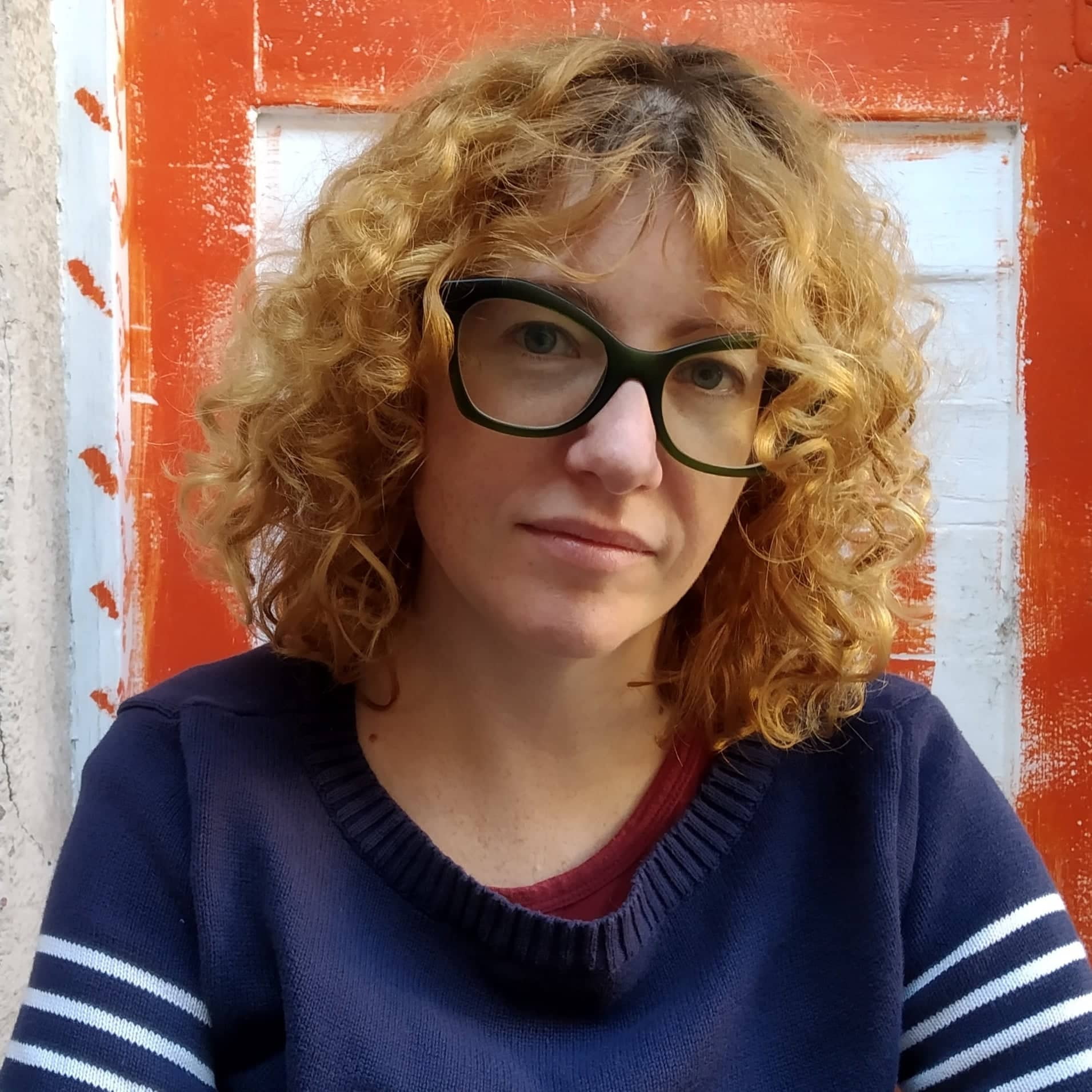
Valeria Graziano is a cultural theorist, practitioner and educator whose research focuses on the creation of post-work imaginaries, micro-political practices and radical pedagogies. She holds an MA in Visual Cultures from Goldsmiths University (supported by the AHRC) and a PhD in Critical Organisational Theory from Queen Mary University of London (as a Creative Industries Fellowship). Valeria is currently a research fellow at Middlesex University. Her post-doctoral project is exploring different ‘prefigurative practices’ and the role of imaginal actions in the organisational life of collectives. Over the years, Valeria has collaborated with a number of arts institutions, including Van Abbemuseum (Eindhoven), MACBA (Barcelona), CASCO (Utrecht), CCA (Tallinn), as well as festivals such as Impulse Theatre Festival (Düsseldorf), Steirischer Herbst (Graz) and In Presentables (Madrid). She is a member of the Micropolitics Research Group (2006–present), with which she studies techniques developed within institutional analysis. She is also co-editor of the forthcoming special issue of the journal ephemera: theory & politics in organization, dedicated to the topic “Repair Matters”. She has been a consultant for Arts Council England. A list of her publications can be found in her repository on Humanities Commons (2022).
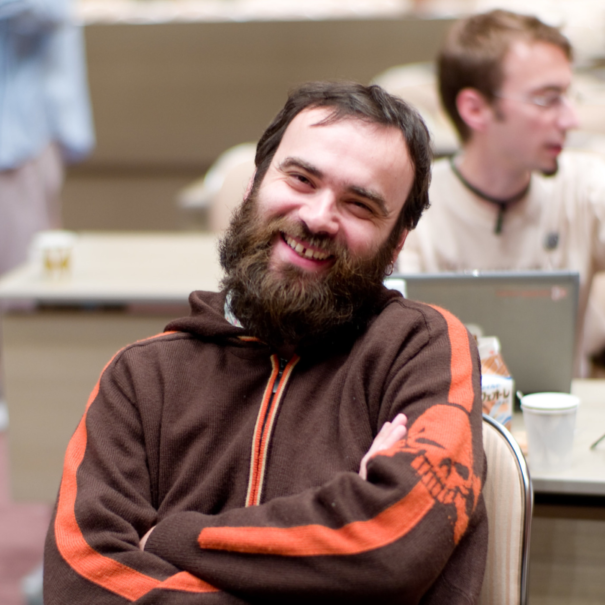
Marcell Mars is one of the founders of the Multimedia Institute – mi2 and the net.culture club mama in Zagreb. He started the practice of skill sharing, regular informal meetings of enthusiasts at the club mama. Marcel has participated in numerous collaborative art and research projects, including NRD Kit, gifoskop, EditThisBanner and Flying Carpet.. He was one of the organizers of the summer camps “Otokultivator” on the island of Vis (in cooperation with URK Močvara and EASA Croatia) and SummerSource (with TacticalTech). He participated in the curatorial and production work of the annual exhibitions mi2: I Am Still Alive (2001) and re:Con (2002), the festival of free culture, science and technology Freedom to Creativity! (2005) and the conceptual exhibition System.hack() (2006). He is a member of the Creative Commons Team Croatia. He regularly holds workshops such as: “Programming for Non-Programmers”, “Social Software and the Semantic Web in Practice”, “Command Line Audio on GNU/Linux” and others. He lectures on topics such as hacking, philosophy of free software, social software and the semantic web. He worked at Hacklab in MaMa (Zagreb), and in Belgrade he led the programs “The Miracle of Technology”, “Hacker Lenses” and “Programming for Non-Programmers” at the Faculty of Media and Communications.In the period 2011–2012 he worked on the research Ruling Class Studies at the Jan Van Eyck Academie in Maastricht, which he later continued in 2015 as a doctoral study at the Digital Cultures Research Lab. In 2013 he was a fellow at the Akademie Schloss Solitude in Stuttgart. Today he is actively advocating for and working on the project Public Library / Memory of the World. In addition, he sings, dances, tells stories and creates music under the name Nenad Romić for Novyi Byte.

Alisa Zhulina is an artist-scholar, Assistant Professor of Theatre Studies in the Tisch School of the Arts Department of Drama, and affiliated faculty member in the Department of Russian and Slavic Studies. She holds a B.A. in History and Literature and a Ph.D. in Comparative Literature from Harvard University. Her research interests include the intersections between theatre studies and economic theory, political theatre, modern drama, European theatre history, Eastern European performance, and new media. Her writings have appeared in Theatre Journal, Theatre Survey, Modern Drama, and several edited volumes. Her current book project, Theatre of Capital, focuses on how theatre from the nineteenth century onward is invested in staging and challenging economic ideas. In addition to her scholarly work, Zhulina is a playwright and theatre director. She is the founder of Cacolet Collective, a performance group dedicated to exploring alternative economies through performance and public art. Her plays have been produced by Exquisite Corpse Company, at Dixon Place, New Perspectives Theatre, the Downtown Urban Arts Festival, Festival de Teatro Alternativo in Bogotà, Colombia, and elsewhere.
About CRIC – Festival for Critical Culture:
CRIC aims to defend the right to critical culture, which constantly pushes the boundaries of emancipatory policies in the socio-cultural space. CRIC is a platform through which the possibilities of penetration between the aesthetic and the political, between artistic practices and their impact on the broader democratization of society, between civil communities and media forms of struggle are explored and studied. With CRIC we want to oppose the “culture of silence” by promoting critical dialogue, new forms of placing and applying knowledge, contemporary memory and current political history, opening up the possibility for permanent social transformations.
The motto of CRIC remains rooted in the thinking of Alain Badiou:
“A community based on a political culture of critical action and confrontation, is a community of freedom, of mutuality, of courageous sailing towards new horizons of society with sails set by the winds of creative artistic confrontation and political imagination.”
Program editor and organizer of CRIC – Festival for Critical Culture:
Iskra Geshoska
Program consultants and organizers:
Tijana Ana Spasovska and Artan Sadiku
Collaborative team:
Petar Milat, Zorica Zafirovska, Aleksandra Bubevska, Koma design studio.
For more information follow us on:
https://www.facebook.com/KRIKfestival/
https://www.instagram.com/critical.culture/
https://youtube.com/@ngokontrapunkt3837?si=iUuGWynjhBAVMZJ5
Partnerships and support:
CRIC – Festival for Critical Culture is supported within the framework of the project “Culture for Development” of the Swiss Government, which is implemented by the Hartefact Foundation. The content/opinions expressed can never be interpreted as the views of the Swiss Government and the Hartefact Foundation.
CRIC – Festival for Critical Culture is supported by ProPeace North Macedonia, Friedrich Ebert Stiftung Skopje, the Swiss Agency for Development and Cooperation, Future Bright Art Foundation, Goethe-Institut Skopje and the Ministry of Culture and Tourism of the Republic of North Macedonia.
Funded by the European Union. The views and opinions expressed are solely those of the author(s) and do not necessarily reflect the views of the European Union or the European Executive Agency for Education and Culture (EACEA). Neither the European Union nor the EACEA can be held responsible for them.
Shared on: June 10, 2026 at 12:35 am